How to Do Programmatic SEO for Ghost Website in 2026
Master programmatic SEO for Ghost CMS. Automate content creation, reduce setup time to minutes, and scale to thousands of optimized pages with zero coding.

SEOBaby

Programmatic SEO on Ghost enables you to automatically generate hundreds or thousands of SEO-optimized pages without manual coding or content creation. Ghost, combined with tools like SEOmatic or Sheet2Pages, allows publishers and SaaS companies to leverage programmatic SEO for rapid traffic growth. Best for publishers, location-based businesses, and SaaS products targeting multiple keyword variations. Trade-offs include limited design customization compared to custom development, but you gain zero developer time and consistent growth in 2-4 months. Key metrics: Ghost users report 1,900% faster performance than WordPress; programmatic SEO can generate 50-100+ indexed pages monthly; setup takes minutes, not weeks.
What is Programmatic SEO on Ghost?
Programmatic SEO is the practice of automatically generating large volumes of SEO-optimized content pages from structured data sources. Ghost, an open-source publishing platform, combines powerful native SEO features with integrations that make programmatic content creation straightforward.
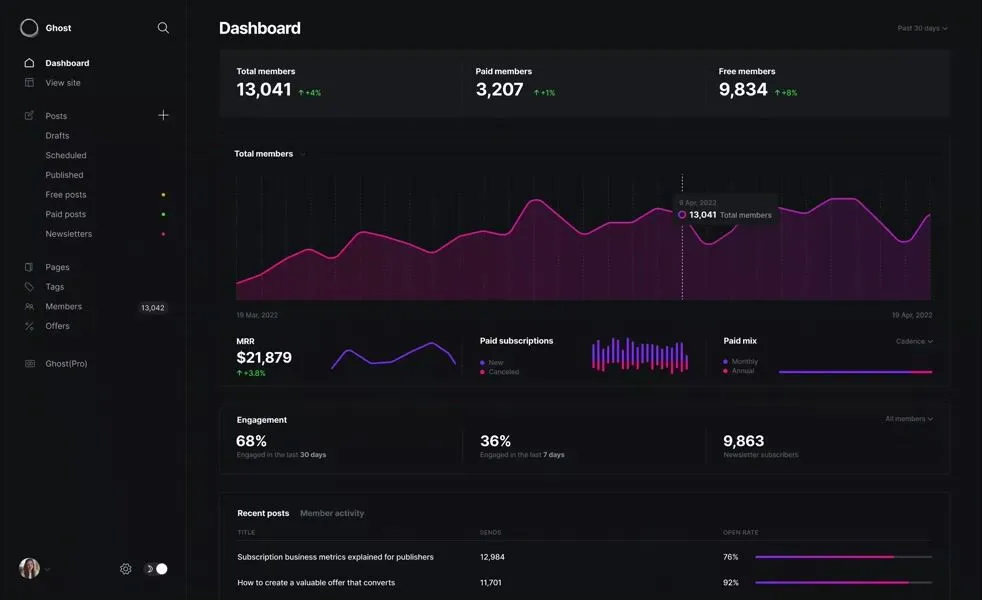
Ghost's built-in SEO capabilities include automatic metadata generation, XML sitemaps, structured data markup, canonical tags, and OpenGraph/Twitter Card support. When combined with programmatic tools, Ghost becomes a scalable solution for publishing hundreds of targeted pages without manual effort.
Unlike WordPress or custom development, programmatic SEO for WordPress often requires plugins and developer involvement. Ghost simplifies this with native features and purpose-built integrations designed specifically for automation.
Why Ghost is Ideal for Programmatic SEO
Ghost excels at programmatic SEO because it was built for publishers and content-heavy applications. Here's why it stands out:
- Native SEO Features: Ghost automatically manages metadata, sitemaps, structured data, and canonical tags, meaning every generated page gets SEO best practices built-in.
- Fast Performance: Ghost delivers up to 1,900% faster performance than WordPress, a critical ranking factor for Google and AI search engines.
- API-First Architecture: Ghost's robust API makes it simple for third-party tools to integrate and automate page creation.
- Minimal Setup: Deploy to Ghost Pro or self-host with just a few clicks—no complex server configuration required.
- Clean, Semantic HTML: Ghost generates semantic markup by default, improving crawlability and AI search visibility.
This makes Ghost a strong choice for programmatic SEO on Next.js-like platforms and other modern CMSs that prioritize performance and developer experience.
How to Set Up Programmatic SEO on Ghost: Step-by-Step
Step 1: Choose Your Programmatic SEO Tool
The most straightforward approach is using SEOmatic's Ghost integration. Other options include Sheet2Pages (which connects Google Sheets to Ghost) and custom API implementations. For hands-off automation, SEOmatic is the fastest option.
Step 2: Create Your Ghost API Token
In your Ghost Admin dashboard, navigate to Integrations → Custom Integrations and create a new API token. SEOmatic requires you to enter your Ghost API URL and token into the platform settings—no plugin installation needed.
Step 3: Build Your Content Template
Define your page template structure:
- Page title and meta description template (with variable placeholders)
- Content structure (intro, body sections, CTA)
- Header images and schema markup
- Internal linking strategy
For example, a SaaS targeting "best [software type] for [use case]" would have a template with placeholders for both variables.
Step 4: Prepare Your Data Source
Compile your keyword and data combinations in a structured format:
- CSV/Google Sheets: Columns for keywords, variations, locations, features, or any data that differentiates pages
- Database API: Direct connection to your product database or keyword research tools
- Manual lists: For smaller datasets, you can list combinations directly in the tool
Step 5: Configure Page Generation Settings
In your programmatic SEO tool:
- Map data columns to template variables
- Set URL slug generation (e.g., /[use-case]/[software-type])
- Configure publication status (draft for review, or auto-publish)
- Enable internal linking if the tool supports it
Step 6: Generate and Review Pages
SEOmatic and similar tools support generating pages in minutes with no coding required. Start with a small batch (10-20 pages) to test formatting, then scale up once quality is verified.
Step 7: Optimize and Monitor
Once live, monitor performance via Google Search Console:
- Track impressions and clicks by page template
- Monitor crawl status and indexing
- Adjust content or internal linking based on initial performance
Key Differences: Ghost vs. Other CMS Platforms
| Platform | Setup Time | Developer Required | Native SEO Features | Programmatic Tools Available |
|---|---|---|---|---|
| Ghost | 5-10 minutes | No | Excellent (built-in) | SEOmatic, Sheet2Pages |
| Shopify | 15-30 minutes | No (for most setups) | Good | Replo, Seomatic |
| Webflow | 20-40 minutes | Minimal | Good | Webflow Collections, CMS |
| Next.js | 1-2 hours | Yes | Depends on setup | Extensive (custom) |
| WordPress | 30-60 minutes | Often required | Good (plugins) | Rank Math, Yoast |
Ghost wins on simplicity and speed. It's purpose-built for content creation with excellent native SEO, making it ideal for publishers, agencies, and SaaS companies wanting zero developer involvement.
Common Challenges & Solutions
Challenge 1: Ensuring Content Quality at Scale
Solution: Start with well-researched templates and test pages before full generation. Use AI writing tools to create compelling body content that goes beyond keyword stuffing. Review the first batch of pages for tone, accuracy, and relevance.
Challenge 2: Managing Duplicate Content
Solution: Ghost automatically handles canonicalization, but ensure your template variations are genuinely different. Vary headings, examples, and CTAs across page groups.
Challenge 3: Internal Linking at Scale
Solution: Advanced tools like SEOmatic can auto-generate contextual internal links between related pages. Alternatively, map relationships in your data source (e.g., "this page links to these other variations").
Challenge 4: Keeping Content Fresh
Solution: Automate refreshes by regenerating pages monthly with updated data. Ghost's API and tools like SEOmatic support scheduled generation.

Programmatic SEO on Ghost vs. Doing It Yourself
| Factor | DIY (Custom Dev) | Freelancer | Agency | SEOBaby |
|---|---|---|---|---|
| Setup Time | 4-12 weeks | 3-8 weeks | 6-12 weeks | 5 minutes |
| Developer Hours Needed | 80-200 hours | 40-100 hours | 20-80 hours (ongoing) | 0 hours |
| Monthly Cost | $0 (salary) + tools | $2,000-$5,000 | $5,000-$15,000+ | $299-$999 |
| Setup Cost | $0-5,000+ | $3,000-$15,000 | $5,000-$25,000+ | Free trial |
| Time to See Results | 3-6 months | 2-4 months | 4-8 months | 2-4 months |
| Ongoing Maintenance | High | High (no guarantees) | Included | Fully automated |
SEOBaby is purpose-built for this exact use case. It handles Ghost integration, template creation, data mapping, page generation, and continuous optimization—all completely hands-off. You get consistent organic growth (0 to 1,000+ organic visits per month) at a fraction of traditional agency costs.
Best Practices for Ghost Programmatic SEO
- Start small: Generate 10-50 test pages to validate templates, then scale to hundreds.
- Use long-tail keywords: Focus on less competitive 3-5 word phrases. Programmatic SEO wins through volume, not competition.
- Leverage Ghost's semantic HTML: Ghost outputs clean, semantic code by default—this helps both Google and AI search engines understand your content.
- Build internal linking: Connect related pages with contextual links. Ghost's clean structure makes this easier than WordPress.
- Optimize for AI search: Structure your content with clear answers, comparison tables, and lists—these formats are cited frequently by ChatGPT, Perplexity, and Gemini.
- Monitor and refresh: Regularly update underperforming pages with new data, examples, or internal links.
- Focus on genuine value: Thin, keyword-stuffed content gets buried. Ensure every page answers a real user question.
The Bottom Line
Programmatic SEO on Ghost is the fastest way to go from zero organic traffic to consistent, sustainable growth. Ghost's native SEO features, combined with tools like SEOmatic, eliminate setup friction and developer dependencies.
Whether you're a SaaS company, publisher, or e-commerce business, Ghost makes programmatic SEO accessible. You don't need a large team, expensive developers, or months of setup time. From zero to thousands of indexed, ranking pages in weeks—not quarters.
If you want to eliminate the complexity entirely and focus on growth, SEOBaby handles Ghost programmatic SEO end-to-end—from template design to content generation to ongoing optimization. Start publishing and scaling with zero effort.
Start scaling your organic traffic with SEOBaby today.