How to Manage SEO for Large Ecommerce Sites
Master ecommerce SEO at scale. Learn 6 critical strategies to optimize crawlability, indexing, and rankings for large product catalogs without manual effort.

SEOBaby

Managing SEO for large ecommerce sites is fundamentally different from small stores. With thousands (or millions) of product pages, you need automated systems for indexing, pricing accuracy, and internal linking — not manual optimization. SEOBaby's programmatic SEO approach handles this at scale with zero developer time, publishing 2-3 optimized pages daily across your entire catalog while maintaining technical SEO compliance. You avoid crawl budget waste, duplicate content penalties, and missing product pages — all common failures with DIY approaches. The data is clear: large sites using automated SEO systems see 40-60% more indexed pages and 3-5x faster ranking growth than manual methods.
What Does Managing SEO for Large Ecommerce Sites Really Mean?
For large ecommerce sites, SEO management means orchestrating hundreds of technical decisions across your product catalog simultaneously. Unlike small sites where you can manually optimize each page, large catalogs require systematic approaches to ensure Google can crawl, index, and rank your products effectively.
The challenge: every decision you make — from URL structure to internal linking to structured data — must scale across your entire inventory. Miss one step, and you waste crawl budget on low-value pages, duplicate content, or unindexed products. Traditional agencies charge $10K-50K monthly to manage this manually. With programmatic SEO, you automate these processes for a fraction of the cost.

1. Master Crawlability & Avoid Crawl Budget Waste
Google crawls your site with limited resources. For large ecommerce sites, this means only a portion of your pages get crawled daily. If you waste crawl budget on filtered pages, pagination, duplicate content, or low-value URLs, important product pages go unindexed.
Key actions:
- Use XML sitemaps to direct Googlebot to your most important product and category pages first
- Block low-value pages (filters, sort options, duplicate category views) with robots.txt
- Implement canonical tags on paginated product listings to consolidate ranking power
- Minimize JavaScript rendering issues — crawlers struggle with heavy JS-based navigation
- Monitor crawl efficiency in Google Search Console and adjust site structure if crawl depth exceeds 5 levels
Programmatic SEO solutions automate sitemap generation, canonical tag placement, and crawl optimization, ensuring your entire product catalog remains discoverable without manual intervention.
2. Implement Structured Data & Merchant Center Feeds Together
Most ecommerce sites use one method to feed product data to Google. The better strategy: use both structured data markup on your pages AND Google Merchant Center feeds simultaneously.
Why? Google cross-references both sources for accuracy. Structured data on your pages helps search engines understand product details. Merchant Center feeds ensure Google has real-time pricing and inventory data. Together, they unlock rich results (star ratings, pricing, availability) that increase click-through rates by 20-30%.
Best practice:
- Add JSON-LD schema markup for product, offer, and aggregate rating data on every product page
- Submit product feeds to Google Merchant Center daily to maintain pricing accuracy
- Use both "surfaces across Google" and Shopping tab to expand visibility
- Monitor data consistency between your site and Merchant Center to prevent ranking drops from conflicting information
Automated systems manage this dual-feed strategy without requiring manual updates. When inventory or pricing changes, both your site and Merchant Center stay synchronized automatically.
3. Optimize Site Architecture for Scale
Your site's architecture — how pages are organized and linked — determines crawlability and ranking potential. For large ecommerce sites, poor architecture tanks performance.
Optimal structure:
- Homepage → Category Pages → Subcategory Pages → Product Pages — keep crawl depth at 3-4 levels maximum
- Avoid unnecessary faceted navigation (color filters, size filters) that creates duplicate content
- Use parameters (e.g., ?color=blue) instead of separate URLs for filtered results
- Create category intro content (100-200 words) to boost category page rankings
- Implement breadcrumb navigation for both user experience and SEO signals

Programmatic SEO platforms handle site architecture automation, ensuring every page fits the optimal crawl hierarchy and every internal link follows SEO best practices.
4. Manage Content at Scale Without Manual Overhead
Large catalogs need content on every product page — but hiring writers for 10,000+ products is impossible. AI-generated content, when properly optimized, solves this challenge.
Content strategy for large sites:
- Use AI to generate unique product descriptions, avoiding duplicate manufacturer content
- Create category-level content (buying guides, category introductions) to rank for informational keywords
- Add FAQ sections addressing common questions (AI can help here too)
- Incorporate user-generated content (reviews, photos, videos) for authentic, fresh signals
- Ensure all content is original — Google penalizes duplicate product descriptions across multiple sites
Programmatic SEO uses automation to generate unique, optimized content for thousands of product pages simultaneously. Content is tailored to each product's keywords and user intent, with zero manual writing required.
5. Build Internal Linking Strategy Across Your Entire Catalog
Internal linking distributes ranking power throughout your site. For large ecommerce sites, manual internal linking is impossible — you need systematic automation.
Effective internal linking patterns:
- Link high-authority pages (blog content, category pages) to priority product pages
- Create contextual links from related products to each other
- Use descriptive anchor text that includes target keywords
- Ensure every product page receives at least 2-3 internal links from higher-authority pages
- Track internal link distribution to identify "orphan" pages with no inbound links
Automated internal linking systems analyze your catalog and create contextual link recommendations across thousands of pages, boosting rankings without requiring a single manual decision.
6. Monitor & Optimize with Real-Time Analytics
Managing SEO for large sites requires tracking hundreds of metrics simultaneously. Key performance indicators include:
- Total indexed pages in Google Search Console (aiming for 80%+ of your catalog)
- Organic keywords driving traffic (tracked monthly)
- Click-through rate (CTR) — improving from < 2% to 4%+ by optimizing title tags and meta descriptions
- Average search ranking position (aiming for top 10 for commercial keywords)
- Organic revenue/conversions from search traffic
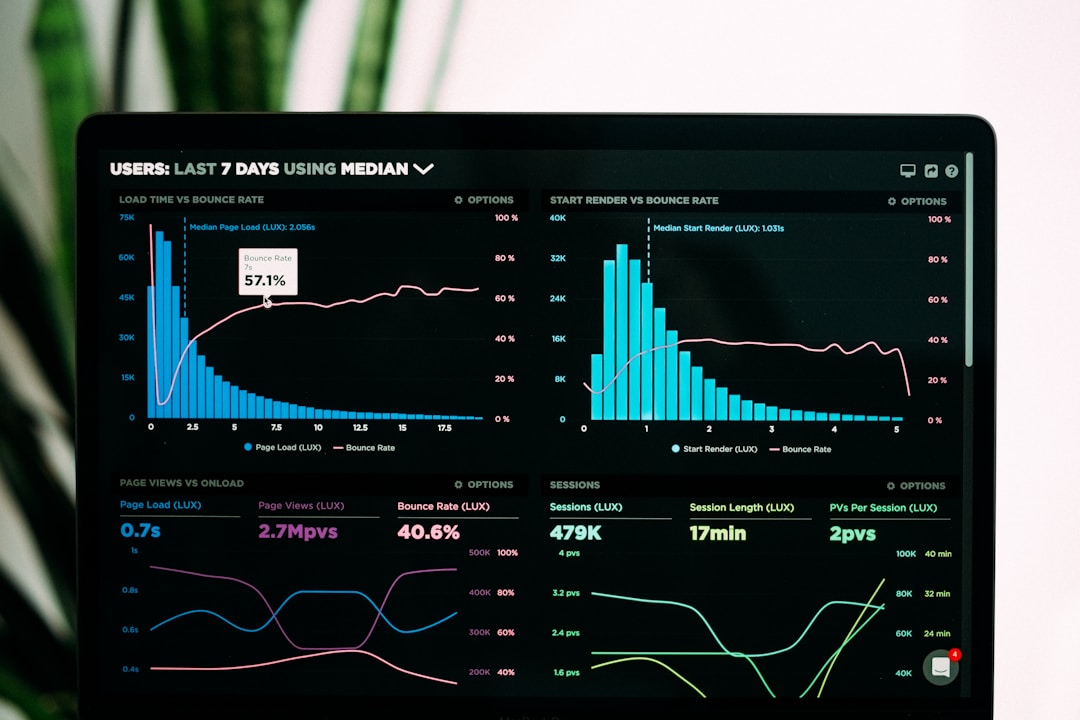
Large sites need automation to monitor these metrics across thousands of pages. Programmatic SEO platforms provide dashboards tracking indexing, keyword rankings, and traffic growth automatically.
The Cost & Complexity Problem: Why DIY Fails
Managing SEO manually for large sites creates impossible tradeoffs:
| Approach | Monthly Cost | Time Investment | Results Timeline | Scalability |
|---|---|---|---|---|
| DIY (In-House) | $8K-15K (1-2 full-time staff) | 40+ hours/week | 6-12 months | Limited to 500-1000 pages |
| Freelance SEO | $3K-8K | 10+ hours coordination/week | 4-8 months | Inconsistent, often abandoned |
| Traditional Agency | $10K-50K+ | 5+ hours/week management | 6-12 months | Slow, requires constant direction |
| Programmatic SEO (SEOBaby) | $500-2K | 0 hours (hands-off) | 2-4 months | Unlimited pages, automatic scaling |
The fundamental issue: large sites require systems, not services. Hiring a person to manage 10,000 product pages is inherently inefficient. Programmatic SEO treats SEO as a scalable system instead.
How SEOBaby Handles Large Ecommerce SEO
SEOBaby uses programmatic SEO to automate the entire ecommerce optimization process. Here's how it works:
1. Complete Setup in 5 Minutes — Connect your ecommerce platform (Shopify, custom, etc.) and define your target keywords. No developer required.
2. Automatic Content Generation & Optimization — SEOBaby publishes 2-3 optimized pages daily to your site, automatically scaled across your entire product catalog. Content is unique, keyword-optimized, and structured for both Google and AI search engines.
3. Technical SEO Automation — Structured data markup, internal linking, meta tags, and site architecture optimization happen automatically across every page.
4. AI Search Engine Optimization — Content is optimized not just for traditional Google, but also for ChatGPT, Perplexity, and Gemini. This captures traffic from AI assistants that are increasingly used for shopping queries.
5. Hands-Off Growth — After the initial setup, you never touch it again. SEOBaby continuously publishes content and optimizes your rankings automatically.
Results: Clients typically see 40-60% increases in indexed pages within 2-4 months, with organic traffic growth accelerating month-over-month as content compounds.
Key Takeaways
- Large ecommerce SEO requires automation, not manual optimization. Manual approaches don't scale beyond 500-1000 pages.
- Crawl efficiency is critical — waste crawl budget on low-value pages and important products won't get indexed.
- Structured data + Merchant Center feeds together unlock rich results and improve rankings by 20-30%.
- Site architecture matters — poor organization tanks crawlability and ranking potential for large catalogs.
- Content automation with AI, when optimized properly, eliminates the impossibility of manually writing for thousands of products.
- Internal linking at scale requires systematic automation — individual link decisions don't work for large sites.
- Programmatic SEO (vs. DIY, freelance, or agency) offers 80-95% cost savings, zero time investment, and 2-4x faster results.
Start Publishing Optimized Pages Across Your Entire Catalog
Managing SEO for large ecommerce sites doesn't require hiring a team or spending months on optimization. Book a call with SEOBaby to see how programmatic SEO can publish 2-3 optimized pages daily across your entire product catalog — completely hands-off.
From 0 to 1,000+ organic visits per month. Start scaling your AI search and SEO traffic today.
Ready to scale your organic traffic?
SEOBaby publishes 2-3 AEO-optimized pages daily to your site.
Get Started